Sheathing is an essential component in construction, providing structural support and protection against various elements. Understanding the different types of sheathing materials available is crucial for builders and homeowners alike. From plywood to foam board, each type offers unique advantages and applications. Let’s delve into the various types of sheathing materials and their characteristics.
Master Structural Comparison Table
| Sheathing Type | Relative Cost | R-Value (per inch) | Moisture Resistance Rating | Best Common Application |
| OSB (Oriented Strand Board) | Low to Moderate | $R-0.85$ to $R-1.1$ | Moderate (Edges prone to swelling) | Standard modern structural walls & roofs |
| Plywood | Moderate to High | $R-1.1$ to $R-1.25$ | High (Dries quickly, structural integrity holds) | Traditional framing, high-wind zones |
| Rigid Foam Board | Moderate | $R-3.0$ to $R-6.5$ | Excellent (Acts as continuous vapor barrier) | Non-structural thermal envelope upgrades |
| Fiberboard | Low | $R-2.0$ to $R-2.8$ | Low to Moderate (Requires complete sealing) |
1. Introduction to Sheathing
Sheathing refers to the layer of material applied to the exterior of a building’s frame to provide structural support and weather resistance. It acts as a barrier, helping to protect the structure from moisture, wind, and other external elements.
2. Importance of Sheathing in Construction
Sheathing plays a vital role in the construction process by providing stability and strength to the building structure. It helps distribute the load evenly across the frame and provides a base for exterior finishes such as siding or stucco, forming the foundation for any well-built residential siding system.
3. Plywood Sheathing
Definition and Composition
Plywood sheathing is made from thin layers of wood veneer that are glued together to form a strong and durable panel. It is available in various thicknesses and grades, allowing for flexibility in construction projects.
Advantages and Disadvantages
Advantages:
- High strength and durability
- Resistant to moisture and warping
- Easy to work with and install
Disadvantages:
- Higher cost compared to other sheathing materials
- Susceptible to delamination if exposed to prolonged moisture
Common Applications
Plywood sheathing is commonly used in residential and commercial construction for wall and roof sheathing, as well as subflooring.
4. Oriented Strand Board (OSB)
Characteristics and Composition
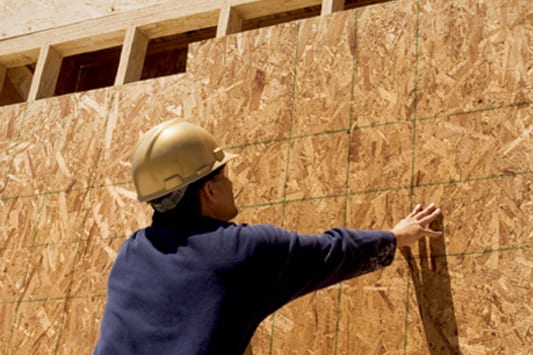
Oriented Strand Board (OSB) is made from compressed layers of wood strands bonded together with adhesive. It is known for its strength and dimensional stability.
Pros and Cons
Pros:
- Lower cost compared to plywood
- Uniformity in strength and thickness
- Resistant to moisture and insects
Cons:
- Susceptible to swelling and delamination if exposed to moisture
- Limited aesthetic appeal compared to plywood
Typical Uses
OSB is commonly used for wall and roof sheathing in residential and commercial construction projects.
Choosing the Right Substrate Pairings for Your Exterior Cladding
Best Sheathing for Fiber Cement & James Hardie Siding
- The Verdict: The Verdict: 1/2 inch CDX Plywood or Premium OSB
- Why it Matters: Heavy claddings like fiber cement demand an incredibly rigid, structural substrate that holds structural fasteners tight over time. If you are preparing your home for a top-tier siding installation in Sacramento, ensuring your underlying wood sheathing is completely solid and free of rot is vital to maintaining your manufacturer product warranty.
Best Sheathing for Vinyl Siding
- The Verdict: OSB paired with an exterior layer of Rigid Foam Board.
- Why it Matters: Vinyl panels are hollow and do not add structural insulation value to your home. Backing your vinyl walls with a continuous exterior layer of rigid foam board blocks thermal bridging, stops framing air leaks, and significantly dampens exterior street noise.
Best Sheathing for Engineered Wood & T1-11 Panels
- The Verdict: Standard Structural Plywood.
- Why it Matters: Wood-on-wood applications need to manage moisture shifts gracefully. Plywood expands and contracts uniformly and dries out much faster than OSB if unexpected water sneaks past the primary house wrap layer, saving your structural studs from early dry rot failure.
5. Fiberboard Sheathing
Overview and Composition
Fiberboard sheathing is composed of wood fibers bonded together with adhesive to form a dense panel. It is available in various densities and thicknesses.
Benefits and Drawbacks
Benefits:
- Excellent insulating properties
- Resistant to moisture and pests
- Environmentally friendly
Drawbacks:
- Less structural strength compared to plywood or OSB
- Prone to swelling and deterioration if exposed to moisture
Applications in Construction
Fiberboard sheathing is often used as an insulating sheathing material in wall assemblies, providing both structural support and thermal insulation.
6. Foam Board Sheathing
Explanation and Components
Foam board sheathing is made from rigid foam insulation materials such as polystyrene, polyisocyanurate, or polyurethane. It offers excellent thermal insulation properties.
Advantages and Limitations
Advantages:
- High R-value for superior insulation
- Lightweight and easy to handle
- Resistant to moisture and pests
Limitations:
- Lower structural strength compared to plywood or OSB
- Vulnerable to damage from UV exposure
Common Applications
Foam board sheathing is commonly used in residential and commercial construction for exterior insulation and as a substrate for siding or stucco, especially in modern residential siding projects focused on energy efficiency.
7. Gypsum Sheathing
Description and Composition
Gypsum sheathing is made from gypsum plaster reinforced with fiberglass or cellulose fibers. It provides fire resistance and sound insulation properties.
Pros and Cons
Pros:
- Excellent fire resistance
- Sound dampening properties
- Resistant to mold and mildew
Cons:
- Susceptible to moisture damage if not properly protected
- Limited structural strength
Typical Applications
Gypsum sheathing is often used in areas requiring fire-rated construction, such as exterior walls and shaft enclosures.
Conclusion
In conclusion, the choice of sheathing material plays a significant role in the overall performance and durability of a building structure and directly impacts the effectiveness of any residential siding solution installed over it. Each type of sheathing material offers distinct advantages and limitations, depending on the specific requirements of the project. Builders and homeowners should carefully consider factors such as cost, durability, and performance when selecting the appropriate sheathing material for their construction needs.
FAQs
- Is plywood sheathing better than OSB for exterior walls?
- Both plywood and OSB have their advantages and limitations. Plywood is known for its superior strength and durability, while OSB offers cost savings. The choice depends on factors such as budget and performance requirements.
- Can foam board sheathing be used in cold climates?
- Yes, foam board sheathing is often used in cold climates for its excellent thermal insulation properties. However, proper installation and moisture management are essential to prevent issues such as condensation and moisture buildup.
- Is fiberboard sheathing environmentally friendly?
- Fiberboard sheathing is considered environmentally friendly as it is typically made from recycled wood fibers and does not contain harmful chemicals. Additionally, its insulating properties can contribute to energy efficiency in buildings.
- What is the lifespan of gypsum sheathing?
- The lifespan of gypsum sheathing depends on factors such as exposure to moisture and mechanical damage. With proper installation and maintenance, gypsum sheathing can last for many years, providing fire resistance and structural support.
- Can I use multiple types of sheathing in the same construction project?
- Yes, it is possible to use multiple types of sheathing in a construction project, depending on the specific requirements of different areas such as walls, roofs, and floors. However, compatibility and proper installation methods should be considered to ensure optimal performance and durability.
- Can you install new siding directly over old, existing wood sheathing?
- Yes, provided the underlying panels are clean, level, structural, and dry. During standard residential siding replacement projects, technicians should completely strip away the old cladding to expose and run structural diagnostics on the sheathing below. Any soft spots, mold zones, or delaminated areas must be cut out and replaced before the new exterior envelope is installed.
- Is OSB or plywood better for a home’s exterior walls?
- Plywood offers slightly better moisture performance because it dries out faster and holds its structural shape cleanly if it gets wet. OSB is more cost-effective and offers excellent consistency because it lacks the internal knots or core gaps found in plywood. Both are code-approved structural options, though plywood remains the premium standard for coastal or high-precipitation environments.
- Does rigid foam sheathing add structural strength to a wall frame?
- No. Standard rigid foam board sheathing lacks structural racking resistance. If your exterior uses foam insulation boards to optimize energy performance, the building code requires structural bracing elsewhere—either by using plywood/OSB corner panels (infilled with foam) or utilizing metal T-braces cut into the structural wall studs.
Lock In a Free, No-Obligation Estimate
Get transparent pricing on siding, windows, or exterior repairs fast. No sales pressure. Just answers.
Get My Free Estimate